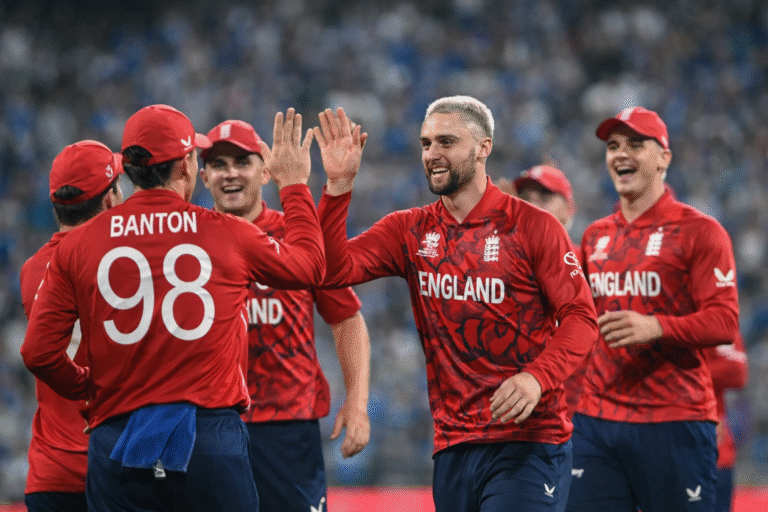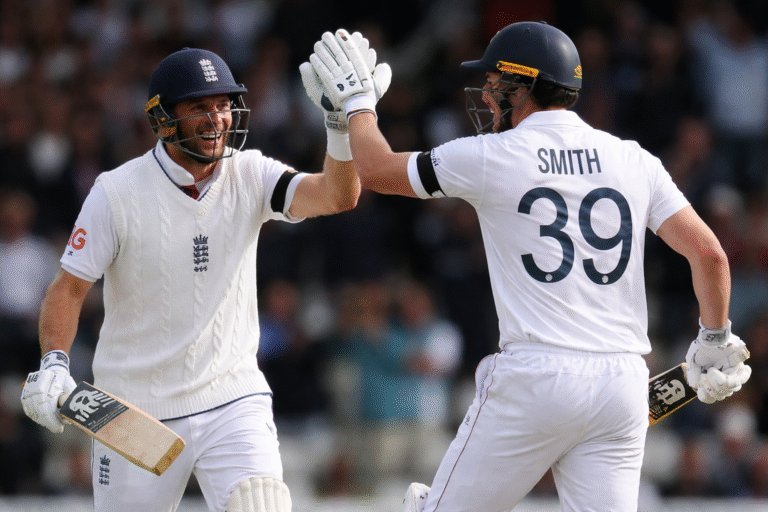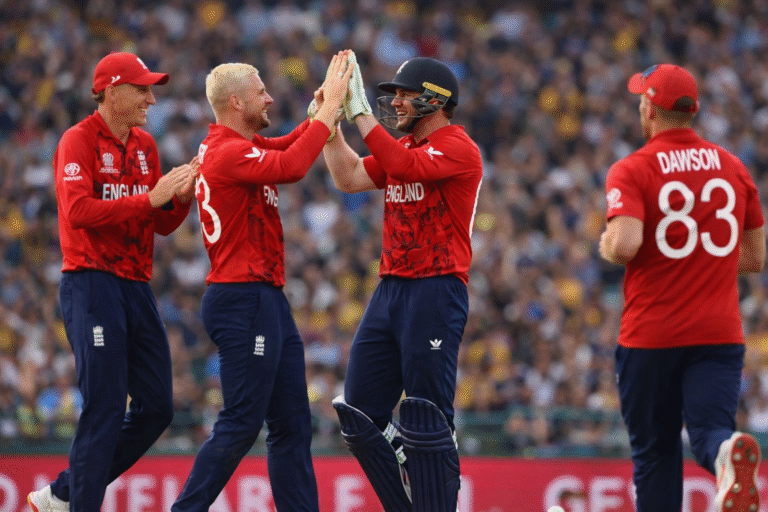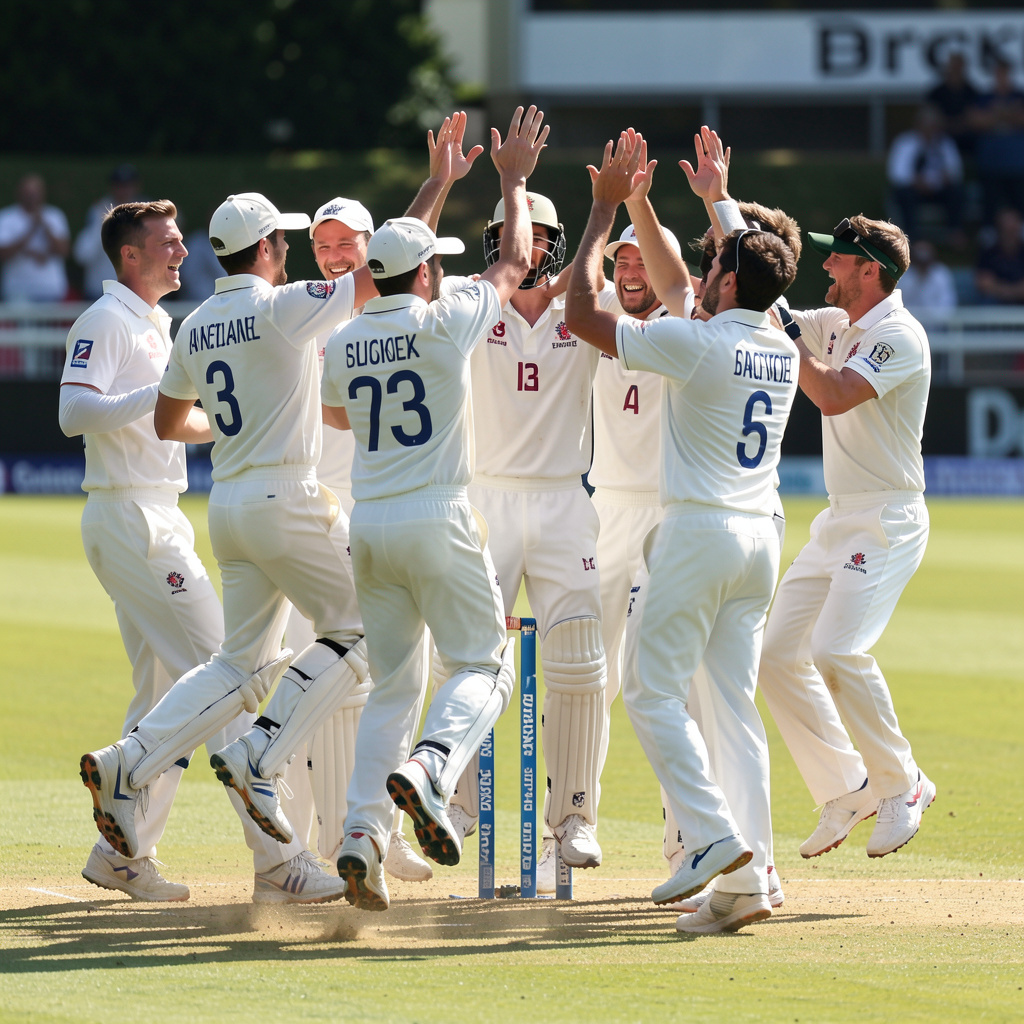
The England cricket team and South Africa national cricket team rivalry is an enduring one in international cricket, creating some unforgettable memories along the way from Test matches to World Cup clashes.
Early in the series, England were dominant; but South Africa quickly made gains thanks to resilient leaders like Graeme Smith and Hashim Amla, whose fearless captaincy shaped the England Cricket Team Vs South Africa National Cricket Team timeline, while Allan Donald’s “white lightning” pace added an extra edge to their ODI encounters.
| Match | Format | Date / Series | Result / Scorecard |
|---|---|---|---|
| Latest — 2nd T20I | T20I | Sep 12, 2025 — South Africa tour of England | England 304/2 (20.0)South Africa 158 (16.1/20)England won by 146 runs — Phil Salt 141 (Player of the Match) (ESPN) |
| 1st T20I | T20I | Sep 10, 2025 — South Africa tour of England | South Africa 97/5 (7.5)England 54/5 (5.0)South Africa won by 14 runs (DLS) — Donovan Ferreira MoM (ESPN) |
| 3rd T20I | T20I | Sep 14, 2025 — South Africa tour of England | Match abandoned — no play (ESPN) |
| 2nd ODI | ODI | Sep 4, 2025 — South Africa tour of England | South Africa 330/8England 325/9 (50 ov)South Africa won by 5 runs — Matthew Breetzke MoM (ESPN.com) |
| 1st ODI | ODI | Sep 2, 2025 — South Africa tour of England | England 131South Africa 137/3 (20.5/50)South Africa won by 7 wickets — Keshav Maharaj MoM (ESPN) |
| 3rd ODI | ODI | Sep 7, 2025 — South Africa tour of England | England 414/5 (50 ov)South Africa 72 (20.5 ov)England won by 342 runs (Reddit) |
Origins
The England cricket team and South Africa national cricket team rivalry is among the greatest in world cricket history. Spanning multiple formats and decades, its story spans dominant eras, political disruptions, dramatic comebacks and unforgettable moments such as Amla’s triple century or Stokes’ counterattacking masterclass – some of the greatest moments ever witnessed during international cricket history have come out of this contest.
England first competed against South Africa during their tour in 1888-89. Although both teams engaged in several matches that season, only three players (Milton, Smith and Vintcent) went on to pursue significant first-class careers post tour. By 1900 however, South Africa had established its own style of play while simultaneously developing an effective pace attack and innovative pace attack of their own.
South Africa was not victorious against England in an official Test match until July 14, 1906 at The Wanderers Stadium in Johannesburg – marking not just sporting success but national pride amidst ongoing colonial tensions and marking the start of what many consider South Africa’s golden era in international cricket.
South Africa’s apartheid policy caused a 21-year break in their rivalry, prompting boycotts by broadcasters, protests outside grounds and cancellation of an MCC tour in 1968 due to South Africa selecting Basil D’Oliveira as captain.
When the two teams met again in 1998, a new chapter in this historic rivalry would begin. On day one of Lord’s Test 1, South African captain Owen Dunell won the toss and elected to bat, thanks to Donald and Pollock opening their innings brilliantly with 357 runs and with Graeme Hick top scoring with 38 runs against England fast bowlers.
Michael Atherton then produced a match-changing performance. Batting against Donald and Pollock of South African pace attack, Atherton batted for 643 minutes across 185 balls – earning himself the moniker ‘The Tank”.
Battles
England and South Africa share a long and distinguished cricketing history dating back to their inaugural Test match between them in 1888-89. Since then, their rivalry has seen dominant eras, political interference, dramatic comebacks and explosive comebacks; from early games’ raw grit to T20 clashes; this one of cricket’s premier rivalries; whether Hashim Amla’s triple centuries or Ben Stokes’ counterattacking masterclass will remain with fans forever.
Following an underwhelming summer which included multiple series losses against India, England were eager for something positive to show at their New Year’s Day Test against South Africa. Not only was it an opportunity for England to improve their touring record but it could also set the stage for what they hope will be an improved cricketing year ahead.
Proteas batsmen found it difficult to score early runs despite Aiden Markram and Temba Bavuma both getting starts from openers Aiden Markram and Temba Bavuma, although Aiden Markram and Temba Bavuma did make starts of their own. Unfortunately for South Africa though, their lower order collapsed dramatically with captain Sune Luus and wicketkeeper Lizelle Lee both falling within one over and leaving England on 83-3 by half time.
England’s bowlers managed to remain composed and make short work of South Africa’s middle order, taking four wickets between Jofra Archer, Jacob Bethell and Will Jacks – and Jofra himself!
Ben Duckett and Jamie Smith fell quickly to Johan Botha and Dewald Brevis early on, however Matthew Breetzke and Tristan Stubbs responded swiftly by building partnerships of 85 and 58 respectively – before Jofra Archer returned with three wickets in 10 overs before Steyn was out trying to reverse sweep Ecclestone for another run-out.
England’s batsmen struggled under immense pressure in an intense climactic endgame of the match. Ben Stokes provided relief with an outstanding six outside the stadium that brought them one step closer to victory, followed by Sam Robson who hit an unbeaten 66 and Joe Root completing victory with an elegant 88.
Scorecards
Few rivalries in global cricket can compare to England versus South Africa when it comes to emotional weight. Not only are tactics and talent on display here; wills also clash and every move is scrutinised from both stands and social media; even small errors can have lasting repercussions as fans remember failures just as vividly as triumphs.
Recently, rivalries have progressed beyond mere scrapping into a test of planning and execution. Matches now take place over various phases, with powerplays becoming chess matches and death overs becoming brutal battles fought to a finish. Fans reading scorecards can follow every shift in momentum ball by ball as one game turns on a knife edge.
South Africa began this series under pressure, as Kagiso Rabada missed the opening match with a knee injury and opener David Miller struggled to find his form in the second game. Once settled however, South African batsmen took control.
Eoin Morgan scored an unprecedented 155 not out, while Jos Buttler hit 62 from 51 balls for England to reach 338-8 in reply. When South Africa reduced them to 303-8 through bowlers’ efforts alone, Matthew Breetzke and Tristan Stubbs helped reach their target with an unbroken third-wicket partnership of 147 runs – even then they rallied!
England’s Jofra Archer and Dom Bess each took five wickets, but South Africa won the series 3-1 despite their efforts. Quinton de Kock replaced Faf du Plessis as Proteas ODI captain while Dale Steyn made his T20 return while Jos Buttler was not included.
England were victorious after an extraordinary series that could have gone either way, yet managed to overcome an extremely challenging situation and claim their first series win since 2009 in South Africa. It was yet another reminder why this rivalry is unique, with tension palpable at Lord’s and Oval, while Newlands and Centurion stand-offs held under immense pressure – the kind that can help players excel if they know how to cope.
Conclusions
South Africa made its return to international cricket following two decades of isolation due to apartheid in 1991, drawing massive crowds and displaying incredible talent – Graeme Pollock was among many other South Africans that participated in what has since been considered their golden era; Atherton-Donald duels have long remained one of the great battles of test history.
England and South Africa have established one of the greatest rivalries in world cricket, spanning decades with dominant eras, political interruptions, dramatic comebacks, legendary duels, high-scoring contests in Tests, ODIs and T20Is; each encounter witnessed classical technique met fiery bodily style battles for supremacy on and off the pitch – something the Basil D’Oliveira Trophy stands as testament to.
About the Author